
Skin tags are a common harmless skin tissue growth, also known as acrochordons. They are small, soft growths that hang off the surface of the skin. Common areas where skin tags grow are the neck, underarms, eyelids or other areas where skin rubs together. While they are usually nothing to worry about, their appearance can sometimes be bothersome, especially if they get irritated or caught on clothing or jewellery.
Skin tags are extra cells that are generally benign and can be removed relatively easily by a licensed medical aesthetician or dermatologist. Before getting a skin tag removed, it’s important to get it assessed and make sure it’s not another type of skin growth.
Skin tags are small benign growths that are usually flesh-coloured or slightly darker than the surrounding skin. They may appear as a small bump or hang from the skin by a small stalk.
They can range considerably in size, from just a few millimetres to larger growths. Skin tags are common in areas that experience repeated friction, including the:
Skin tags are not usually painful. However, they can become irritated if they keep rubbing against clothing, jewellery or other skin. They may also bleed if they are accidentally nicked while shaving or otherwise injured.
Because skin tags can resemble other types of skin growth including warts and certain moles, it’s worth having a growth assessed by a licensed professional rather than assuming it is a skin tag.
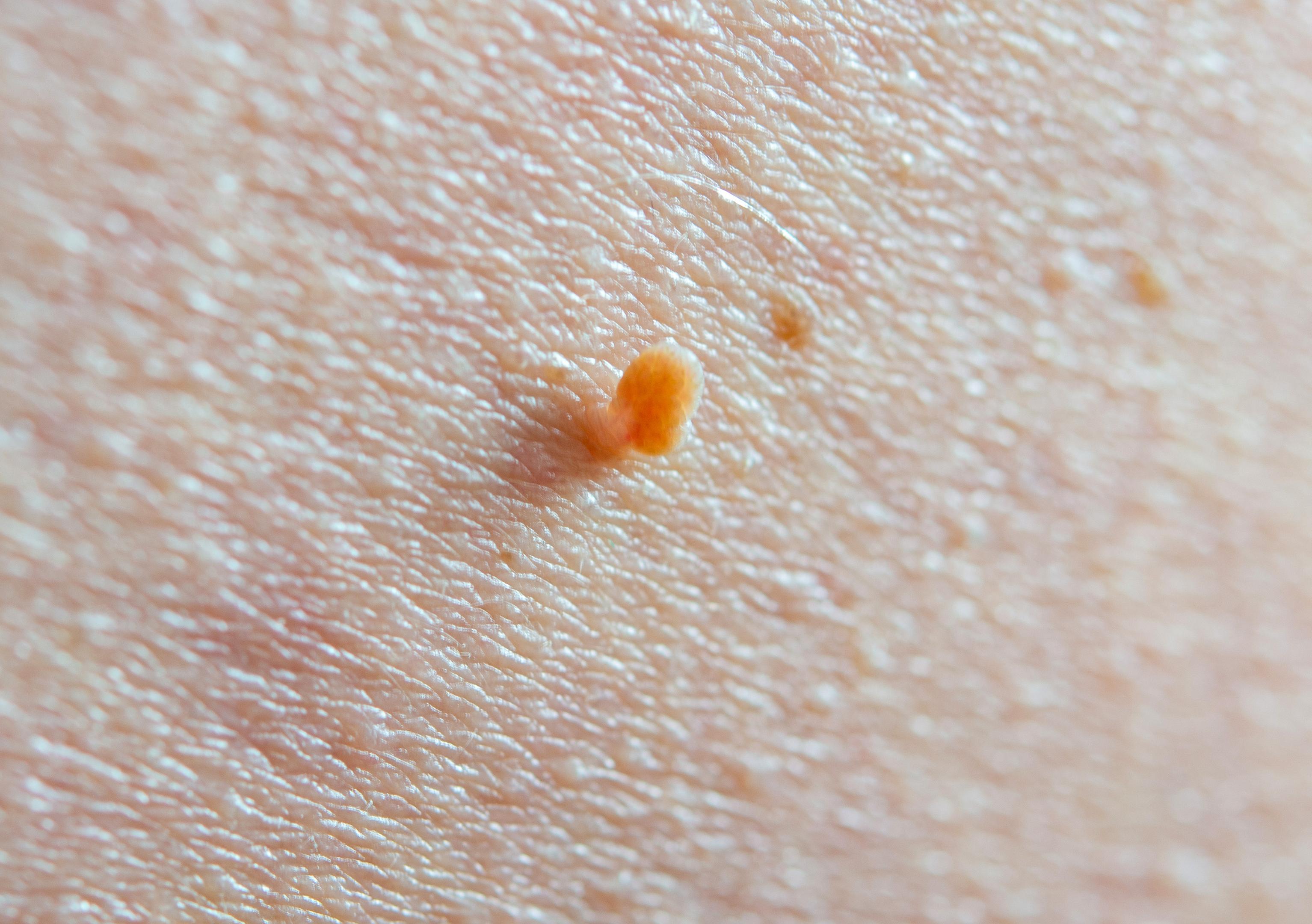
There isn’t one single cause of skin tags. They usually develop through a combination of factors, including friction, age, genetics and certain health or hormonal factors.
Skin tags can occur at any time but they become more common as people age. Over time, repeated friction and changes in the skin can contribute to the development of these small growths.
It’s also common for people to develop more skin tags as they get older. In most cases, they are simply a normal benign skin growth.
Genetics may also play a role in growth factors. If skin tags are common among members of your family, you may be more likely to develop them yourself.
There’s no guaranteed way to prevent skin tags, some people are simply more prone to them than others.
One of the most common causes of skin tags is friction.
Areas where skin repeatedly rubs against itself or clothing and jewellery are particularly prone to skin tags. This explains why they frequently appear around the neck, armpits, groin area and beneath the breasts.
People with more skin folds or who are overweight may have a higher risk of developing skin tags. However, anyone can develop them regardless of body type.
Pregnancy or hormonal health issues like polycystic ovary syndrome can also contribute to the development of skin tags. Hormonal changes during pregnancy may contribute to their growth, and some people notice new skin tags during this time.
Research has also found an association between skin tags and conditions such as type 2 diabetes and metabolic syndrome. Having a skin tag does not mean you have diabetes. However, if you suddenly develop numerous skin tags, it can be worth mentioning them to your doctor, especially if you have other diabetes risk factors.
Skin tag removal is usually a quick office procedure. The best technique depends on factors such as the size and location of the skin tag.
For skin tag removal, laser treatment may possibly be used, directing concentrated laser energy at the growth. The laser uses controlled heat to break down or vaporize the unwanted tissue while limiting damage to the surrounding skin. Depending on the size and location of the skin tag, a topical or local anaesthetic may be used to improve comfort, and the treatment itself is typically relatively quick.
After treatment, the area may appear red, swollen, or irritated as the skin heals. A small scab or crust may also develop and should be allowed to heal naturally. Temporary changes in skin pigmentation are possible, particularly with some skin types. A licensed medical aesthetician can assess whether laser removal is appropriate and explain aftercare, healing, and whether another removal method may be more suitable.
For many skin tags, a dermatologist can numb the area and use a sterile surgical scissors or a blade to remove the growth. This is ideal for thicker pieces or larger growths.
This is a straightforward approach and for suitable skin tags, means the growth is removed during the appointment. A small bandage may be applied afterwards, depending on the location and size.
Cryotherapy uses extreme cold, usually liquid nitrogen, to freeze the skin tag.
The treated area may develop a blister or scab before the skin tag scab falls away. The surrounding skin or blood vessels can also become temporarily irritated following treatment.
Most skin tags don’t require medical treatment. If a small skin tag growth isn’t bothersome, there may be no reason to remove it.
There are certain symptoms where seeing a dermatologist is a good idea.
See a dermatologist if a growth:
A dermatologist can also remove a skin tag if it catches on clothing, if the skin tags affect shaving, or simply bother you cosmetically.
Not every growth that looks like a skin tag is necessarily a skin tag. This is why it’s important to get a professional assessment before attempting to remove skin tags at home. If a skin tag is painful, starts bleeding, develops a different shape, it’s important to get it checked out since it may require treatment.
Trying to cut, burn or destroy a skin growth yourself can result in bleeding, infection or scarring. Home remedies such as apple cider vinegar and tea tree oil can also irritate the skin and potentially cause burns or dermatitis.
There is another important concern: what looks like a skin tag may not actually be one.
If you try to remove a growth that hasn’t been properly identified, you could delay the diagnosis of another skin condition like skin cancer. A dermatologist can professionally examine the growth first and determine whether it’s cancerous or if removal is appropriate.
Skin tags are extremely common and in most cases, harmless. They often develop in areas where skin rubs against skin, clothing or jewellery, and factors such as age, genetics, pregnancy and certain metabolic conditions may also play a role.
If a skin tag isn’t bothering you, there’s usually no medical reason it needs to be removed. If it becomes painful or starts bleeding, or if you notice a sudden change in its appearance, having it assessed by a dermatologist is a good idea.
If the skin tag appearance bothers you, professional removal can be performed quickly and safely. The most important thing is to avoid treating unidentified skin growths yourself. A licensed professional can first confirm what the growth is and then recommend the appropriate treatment.
Typically, skin tags are benign and do not turn into cancer. They are noncancerous growths and are considered harmless.
However, a growth that looks like a skin tag may occasionally be something else like human papillomavirus. If a growth changes, has excessive bleeding, becomes painful or otherwise looks unusual, you should have your skin tags diagnosed by a dermatologist rather than assume what they are.
This is also why attempting to remove an unfamiliar growth at home is not recommended. A licensed professional can determine whether the growth is actually a skin tag and whether it requires further evaluation.
Most skin tags don’t simply disappear on their own. Once a skin tag develops, it will often remain unless it becomes damaged or is professionally removed.
If a skin tag is bothering you, a medical aesthetician can discuss safe removal options and help determine whether treatment is appropriate.

You Derma is a Medical Aesthetics Clinic offering laser hair removal, facial treatments, laser treatments, and cosmetic injectables in Ottawa.
Visit Our Medical Aesthetics Clinic in Manor Park
435 St. Laurent Blvd Suite 204
Ottawa, ON K1K 2Z8
(613) 741-0073