
Choosing the right facial treatment depends on your skin type, concerns and skincare goals. HydraFacials, regular facials and dermaplaning can all improve the appearance of your skin, but each uses a different approach. Some treatments focus on cleansing and hydration, while others target exfoliation, clogged pores or unwanted facial hair. Understanding the differences can help you decide which treatment is best for your needs.
A HydraFacial is a non-invasive, medical-grade facial treatment that combines deep cleansing, gentle exfoliation, pore extraction, and intense hydration using a specialized device in a single session. The patented device removes dead skin cells and impurities while delivering hydrating serums to the skin.
Unlike a traditional facial, which involves manual techniques and skincare products, a HydraFacial uses a device to perform several treatment steps and skin resurfacing procedures. It can help improve skin texture, reduce fine lines and the appearance of congestion to help boost collagen production and leave the complexion looking smoother and brighter.
HydraFacials can be customized to address concerns like dullness, dehydration, clogged pores and uneven skin texture. Depending on the treatment, specialized serums or boosters can also be added at an additional cost.
One of the main benefits is minimal downtime, making them an ideal treatment before a special event. Most people can return to their usual activities immediately, although temporary redness or sensitivity may occur.
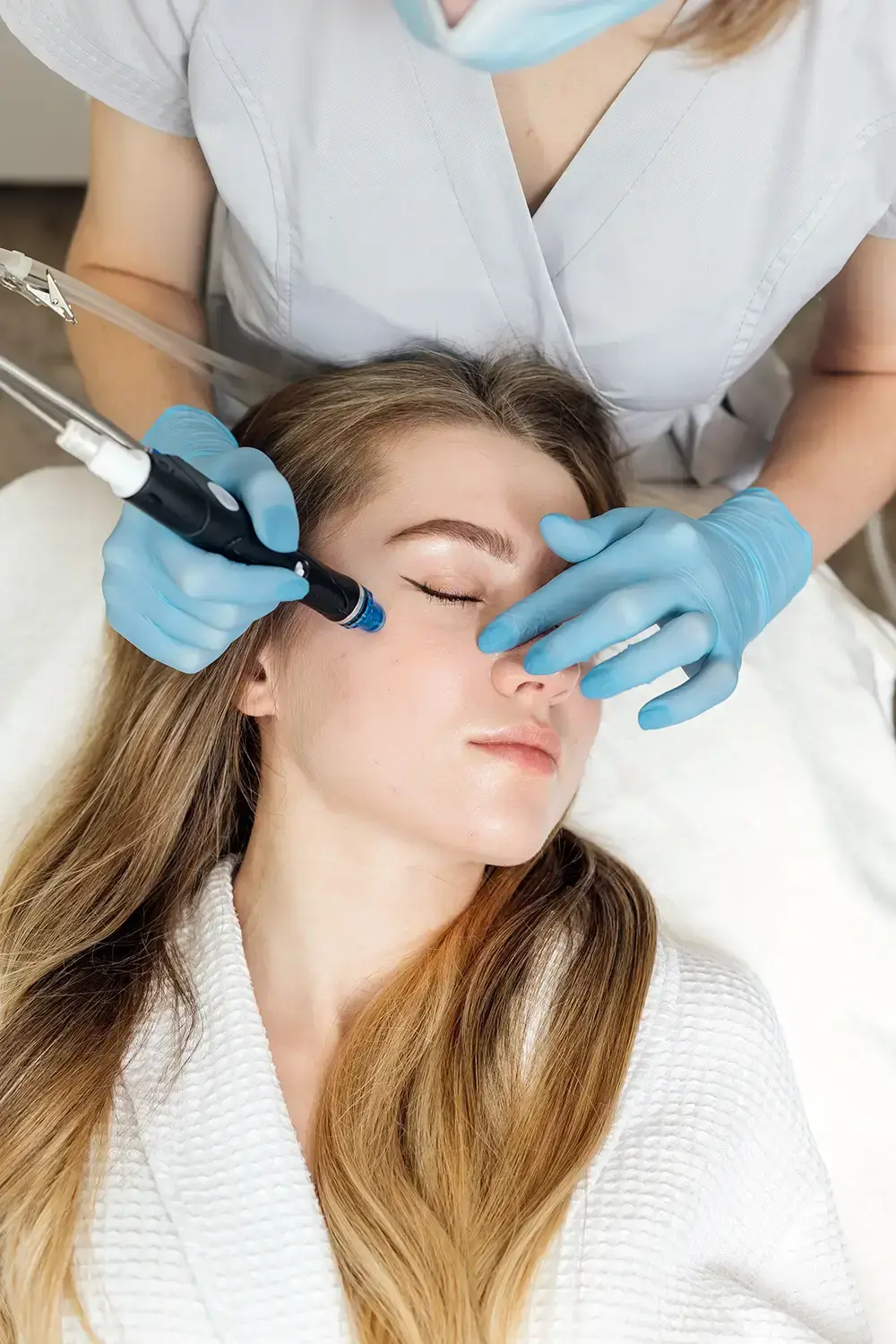
A HydraFacial treatment includes patented technology and several steps to cleanse, exfoliate and hydrate the skin in just one treatment. The exact process depends on the treatment selected and your medical aesthetician’s recommendations. The treatment generally takes less than an hour, averaging about 45 minutes.
The skin is cleansed and gently exfoliated using a patented Hydropeel tip to remove dead skin cells, excess oil and surface impurities. This helps reveal fresher-looking skin and prepares it for the next steps.
An exfoliating solution helps loosen dead skin cells and debris that can contribute to dullness and clogged pores. Ingredients like glycolic and salicylic acids may be used, depending on the treatment and your skin’s needs.
The HydraFacial device uses controlled suction to help remove oil and debris from clogged pores. This step can improve the appearance of blackheads and congestion, especially around the nose, chin and forehead.
Hydrating serums are applied to replenish moisture and support the skin barrier. Ingredients like hyaluronic acid and antioxidants can help the skin look plumper, smoother and more refreshed.
Depending on your goals and specific skin concerns, specialized boosters might be included to target concerns like uneven skin tone or the appearance of fine lines. Moisturizer and sunscreen may be applied to finish the treatment.
HydraFacials combine several skincare steps into one treatment, offering benefits for most skin types looking to improve their complexion without significant downtime.
Exfoliation and painless suction-based extraction help remove surface debris and impurities to unclog pores. This can reduce the appearance of blackheads and congestion, although it doesn’t permanently prevent clogged pores.
Hydrating serums help replenish moisture, for smoother and softer skin. Well-hydrated skin may also appear plumper, making fine lines caused by dryness less noticeable.
Removing dead skin cells helps reduce dullness and reveal a fresher-looking complexion. Many patients notice an immediate improvement in dull skin for a more radiant skin tone after treatment.
Gentle exfoliation helps refine the skin’s surface, making rough patches and minor textural irregularities less noticeable.
Certain serums and boosters may help improve the appearance of uneven skin tone. However, conditions such as melasma or deeper pigmentation may require other treatments.
Most people can resume normal activities immediately after a HydraFacial. Temporary redness or sensitivity is possible, especially for those with reactive or extremely sensitive skin. HydraFacials can be customized for sensitive skin types to help minimize post-treatment irritation compared to manual extraction facials.
HydraFacials can be tailored to specific concerns such as dehydration, dullness and congestion. A skincare professional can recommend suitable products and treatment options based on your skin type and goals. One of the biggest benefits of HydraFacials is their customizable nature which can lead to them being more result-driven compared to a regular facial.
While HydraFacials are proven safe, they may not be suitable for every person and should be avoided with active rashes or sunburns. A licensed aesthetician can help determine whether this innovative modality is appropriate for you.
Although all three treatments aim to improve the appearance of the skin, they differ in technique and results.
| Feature | HydraFacial | Regular Facial | Dermaplaning |
| Main purpose | Cleansing, exfoliation and hydration | General skincare and relaxation | Exfoliation and fine hair removal |
| How it works | Device-assisted exfoliation, suction and serum delivery | Cleansing, masks, massage and optional extractions | A sterile blade removes dead skin cells and fine facial hair |
| Pore extraction | Suction-based | Manual painless extractions may be included | Not a primary function |
| Hydration | A key part of treatment | Depends on products used | Moisturizer is generally applied afterward |
| Best for | Dullness, dehydration, fine lines and wrinkles and mild congestion | General skincare and customized care | Rough texture and unwanted peach fuzz |
| Downtime | Usually minimal | Usually minimal, depending on technique | Usually minimal, although redness may occur |
| Limitations | May irritate sensitive skin | Results depend on products and techniques | May not suit inflamed acne or compromised skin |
HydraFacial: Best for those looking to address dehydration, dullness, clogged pores and uneven texture. It combines exfoliation, extraction and hydration in just one session to deliver several potential benefits at once.
Regular facial: A good option for general skincare and relaxation. Depending on the type, it may include cleansing, masks, massage, exfoliation and manual extractions. Treatments can be adjusted to suit different skin concerns and your overall skin goal.
Dermaplaning: Best for removing fine facial hair and dead skin cells on the outer layer of skin. It leaves the skin feeling smoother and may help makeup apply more evenly, but it does not clear clogged pores in the same way as a HydraFacial.
These treatments are not mutually exclusive. A licensed aesthetician may recommend different treatments over time or combine selected techniques when appropriate. However, combining exfoliating treatments too closely can increase irritation, so proper assessment and timing are important.

HydraFacials, regular facials and dermaplaning each offer distinct benefits. HydraFacials focus on cleansing, exfoliation and hydration, traditional facials provide flexible skincare options, and dermaplaning removes surface dead skin cells and fine facial hair.
The right choice depends on your skin type, concerns and desired results. Sensitivity, active acne, pigmentation and the condition of your skin barrier should all be considered before selecting a treatment.
At You Derma, one of our licensed medical aestheticians can assess your skin and help you choose a treatment suited to your needs and desired outcome. A personalized approach can help you work toward your skincare goals while minimizing unnecessary irritation.
Most providers will recommend getting a HydraFacial about every four weeks to maintain hydration and a smoother-looking complexion. The ideal frequency depends on your skin type, concerns and treatment goals. Your provider can recommend an appropriate schedule to provide visible skin refinement.
Consult your healthcare provider before getting a HydraFacial during pregnancy. Although the treatment is non-invasive, some exfoliating ingredients and serums may not be appropriate for use during pregnancy.
Make sure to let your aesthetician know that you are pregnant and ask them to review all the ingredients used. Depending on the products and treatment steps, a gentler facial focused on cleansing and hydration may be a more suitable option for glowing skin during pregnancy.
Both skin care treatments may be offered as part of a customized skincare plan. However, combining them may increase the risk of irritation and sensitivity. Your provider can determine whether both treatments are appropriate in one session or should be scheduled separately for healthier looking skin.
Results vary depending on your skin and skincare routine. Many people notice more hydrated, brighter-looking and smoother skin immediately after treatment, but these effects are temporary. Consistent skincare, sun protection and an appropriate treatment plan can help maintain results for long term skin health and reducing the appearance of skin aging.

You Derma is a Medical Aesthetics Clinic offering laser hair removal, facial treatments, laser treatments, and cosmetic injectables in Ottawa.
Visit Our Medical Aesthetics Clinic in Manor Park
435 St. Laurent Blvd Suite 204
Ottawa, ON K1K 2Z8
(613) 741-0073